

































.jpg "Minesweeper")


Reversi
How to Play Reversi
Click the left mouse to play
Basic Rules of Reversi
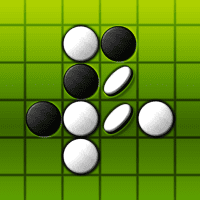
To make a valid move in Reversi, you must place a disc that traps at least one opponent disc between the new disc and another disc of your own color.
A move can flip discs:
- Horizontally
- Vertically
- Diagonally
Multiple lines can be flipped with a single move, making some turns incredibly powerful.
Understanding the Goal
Many beginners assume the objective is to control the board early. However, Reversi is more complex than that.
Winning requires:
- Strategic positioning.
- Long-term planning.
- Controlling important areas.
- Limiting your opponent's options.
The player with the most discs at the end of the game wins, but having the most discs during the game is not always an advantage.
Planning Several Moves Ahead
One of the reasons Reversi remains popular is the depth of its strategy. Every move changes the board dramatically.
Before placing a disc, ask yourself:
- What discs will be flipped?
- What opportunities will I give my opponent?
- Can this move lead to a stronger position later?
- Am I controlling valuable spaces?
Thinking ahead is often more important than maximizing immediate gains.
Tips and Tricks for This Puzzle Strategy Game
Although Reversi has straightforward rules, mastering the game requires patience and strategic thinking. The following tips can help improve your performance.
Prioritize the Corners
Corners are the most valuable positions in Reversi.
Once a corner is occupied, that disc can never be flipped for the rest of the game.
Benefits of controlling corners include:
- Permanent board control.
- Greater stability.
- Strong defensive positions.
- More strategic options.
Experienced players often focus on corner control rather than simply flipping the most discs.
Avoid Dangerous Corner Adjacent Squares
Squares next to corners can be risky, especially when the corner itself is empty.
Playing these positions too early may allow your opponent to capture a corner on their next turn.
When evaluating a move, consider whether it creates opportunities for your opponent.
Focus on Mobility
Mobility refers to the number of legal moves available to a player.
A strong Reversi strategy often involves:
- Maximizing your own options.
- Reducing your opponent's choices.
Players with more available moves typically have greater control over the game.
Don't Chase Disc Count Early
A common beginner mistake is trying to flip as many discs as possible during every turn.
In reality, having too many discs early can become a disadvantage because:
- You expose more discs to flipping.
- You reduce flexibility.
- You create opportunities for your opponent.
Successful players often sacrifice short-term gains for long-term advantages.
Control the Edges Carefully
Edges are important because discs placed there are generally more stable than those in the center.
However, not all edge positions are equally valuable.
Before taking an edge:
- Check nearby corners.
- Consider future mobility.
- Evaluate potential risks.
Smart edge play can dramatically improve your position.
Think About the Endgame
The final stages of Reversi often determine the winner.
As the board fills up:
- Every move becomes more significant.
- Mistakes become harder to recover from.
- Positioning becomes increasingly important.
Experienced players often spend much of the game preparing for a strong endgame.
Learn From Every Match
One of the best ways to improve at Reversi is through experience.
After each game:
- Review key decisions.
- Identify mistakes.
- Analyze successful strategies.
- Look for missed opportunities.
Continuous learning is essential for long-term improvement.
Why You Should Play Reversi
Easy to Learn
One of the biggest advantages of Reversi is its accessibility.
New players can understand the rules within minutes, making it suitable for all age groups.
Despite its simplicity, the game offers impressive strategic depth that keeps players engaged for years.
Browser-Based Convenience
Modern versions of Reversi can be played directly in a web browser.
This means players can:
- Start instantly.
- Avoid downloads.
- Save storage space.
- Enjoy quick gaming sessions.
Browser accessibility has helped introduce the game to new generations of players.
Works on Multiple Devices
Another major benefit of Reversi is its compatibility across different platforms.
Players can enjoy the game on:
- Desktop computers.
- Laptops.
- Tablets.
- Smartphones.
This flexibility allows users to play almost anywhere.
Perfect for Short or Long Sessions
Some games require significant time commitments. In contrast, Reversi offers flexibility.
You can:
- Play a quick match during a break.
- Practice strategies for longer sessions.
- Enjoy casual or competitive gameplay.
The game adapts well to different schedules.
Improves Strategic Thinking
Playing Reversi regularly can help develop valuable cognitive skills.
These include:
- Critical thinking.
- Pattern recognition.
- Decision-making.
- Planning ahead.
- Problem-solving.
Because every move matters, players constantly exercise their analytical abilities.
Suitable for All Ages
Children can learn the basic rules quickly, while adults can appreciate the deeper strategic elements.
This broad appeal makes Reversi one of the most enduring board games ever created.
Reversi Features
Simple Yet Deep Gameplay
Easy rules make the game accessible, while strategic complexity keeps it challenging.
Endless Replay Value
Every match unfolds differently, creating countless unique situations.
Competitive and Casual Modes
Whether playing for fun or aiming to improve, Reversi accommodates various play styles.
Fast Match Length
Games are typically short enough for casual play while still offering meaningful decisions.
Cross-Device Accessibility
Play on computers, tablets, or smartphones with ease.
If you enjoy the strategic thinking found in Reversi, you may also like Shenzhen Mahjong. While the gameplay mechanics differ, both games reward observation, planning, and careful decision-making.