



































.jpg "Minesweeper")


Dreamgate
How to play Dreamgate
Controls
- Click the left mouse button to select cards, choose rewards, attack enemies, or interact with menus.
- Drag the mouse to move cards, inspect abilities, and organize your actions during combat.
Plan every turn carefully
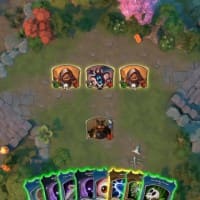
Every turn begins with a new hand of cards.
Instead of using every available card immediately, think about the current battlefield.
Questions worth asking include:
- Which enemy is the biggest threat?
- Should I defend this turn?
- Is it better to save resources for a stronger combo later?
Small decisions often determine the outcome of an entire battle.
Explore branching paths
Dreamgate isn't just about combat.
Between battles, you'll encounter different routes that lead to treasure rooms, merchants, elite enemies, mysterious events, or resting places.
Choosing the right path is just as important as winning fights because it shapes your deck and determines what resources you'll have later.
What makes Dreamgate different from other card games?
Many card games focus only on collecting stronger cards.
Dreamgate adds another layer by combining deck building with roguelike exploration. Every adventure starts with a basic deck, but the choices you make gradually transform it into something unique.
Every run is different
One of Dreamgate's biggest strengths is replayability.
Card rewards appear randomly.
Enemy groups change.
Events offer different outcomes.
Even the relics you discover can completely alter your strategy.
Because of this randomness, players must constantly adapt instead of relying on a single winning formula.
Relics change your strategy
Relics are permanent bonuses collected throughout your journey.
Some increase attack damage.
Others reduce energy costs.
Certain relics improve healing, card drawing, or defensive abilities.
Finding the right relic at the right time can completely change how your deck performs.
Learning to build around these powerful items becomes one of the most rewarding parts of Dreamgate.
Risk versus reward
Every adventure presents difficult choices.
Should you fight an elite monster for better rewards?
Should you visit a merchant instead?
Would resting before a boss battle be safer?
Dreamgate constantly asks players to balance short-term survival against long-term strength.
Why Dreamgate has excellent replay value
Many strategy games become predictable after several hours.
Dreamgate avoids this by generating fresh experiences every time you begin a new run.
Random encounters
Different enemies require different solutions.
Some attack aggressively.
Others weaken your cards.
Certain bosses completely change the pace of battle.
This variety encourages players to rethink their strategies instead of repeating identical turns.
Flexible deck building
There isn't one perfect deck.
Some successful players prefer:
- Heavy damage builds
- Defensive control decks
- Poison strategies
- Healing-focused setups
- Resource generation builds
Trying different archetypes makes every new adventure exciting.
Constant progression
Even unsuccessful runs contribute to future improvement.
Players gradually learn:
- Better card combinations
- Enemy attack patterns
- Efficient path selection
- Resource management
Every defeat becomes useful knowledge for the next attempt.
After finishing an intense strategy session, many players enjoy switching genres for a fresh challenge. Text Twist 2 offers a relaxing word puzzle experience that exercises vocabulary while giving your tactical mind a well-earned break before returning to Dreamgate.
Common mistakes new players should avoid
Ignoring defense
Many beginners attack every turn without considering incoming damage.
Surviving difficult battles usually requires balancing offense and defense.
Spending all resources immediately
Energy is limited.
Using every point early can leave you unable to respond when dangerous enemies prepare powerful attacks.
Planning almost always produces stronger turns.
Fighting every elite
Elite battles offer valuable rewards, but they also carry significant risk.
Sometimes avoiding one difficult encounter preserves enough health to defeat the upcoming boss.
Forgetting long-term planning
Each card reward affects future battles.
Think about how today's decision supports your deck twenty minutes later—not just the next fight.